

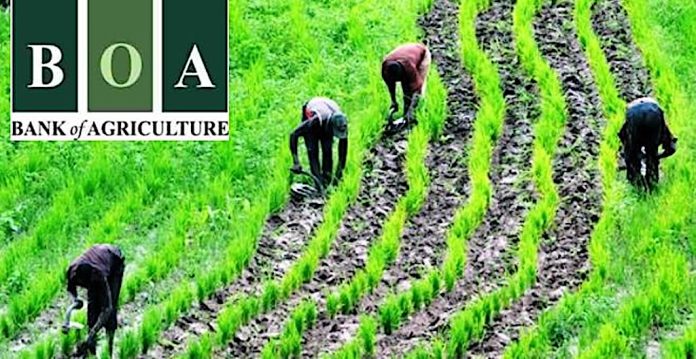
Bank of Agriculture has unveiled a strategic roadmap aimed at modernising its operations, expanding grassroots financial inclusion and accelerating agricultural transformation in line with the Federal Government’s food security agenda.
Managing Director and Chief Executive Officer of the Bank, Ayodeji Sotinrin, said the strategy focuses on upgrading the institution’s operations, improving transparency in intervention programmes and widening access to affordable credit for smallholder farmers.
According to the statement, the BOA is strengthening its agricultural delivery architecture by expanding collaborations with state-level delivery platforms, licensed input suppliers and international development partners.
A key component of the strategy is a recently signed Memorandum of Understanding with the United Nations Development Programme, aligning the bank’s revitalisation agenda with the UNDP’s Integrated Smart States Programme.
The bank said the partnership would help transform Nigeria’s agricultural sector into an investment-ready system capable of attracting blended and climate finance while supporting the One Million Hectare Tree Crop Initiative, described as a presidential priority expected to boost commercial agriculture, job creation and export diversification.
Sotinrin said, “Our vision for the Bank of Agriculture is to deploy capital in an intelligent, smart, and highly efficient way to reposition the institution as a catalyst for food security and rural prosperity. We are bringing everyone into the financial net, especially the youthful population of farmers in our hinterlands, to create a new, resilient food system for Nigeria.”
To improve accountability in government-backed agricultural interventions, the BOA has introduced a new digital verification framework that combines Bank Verification Number (BVN) checks, Know Your Customer (KYC) protocols and GPS farm mapping to ensure loans and farm inputs reach genuine farmers.
The Bank said the system is designed to eliminate fraudulent beneficiaries and prevent the diversion of intervention funds through middlemen.
Commenting on the initiative, the National President of the All Farmers Association of Nigeria, Muhammad Magaji, endorsed the verification measures while urging quicker loan disbursement.
He said, “The All Farmers Association of Nigeria recognises the critical role the Bank of Agriculture plays in shielding our farmers from exorbitant commercial interest rates. While we continuously advocate for faster disbursement cycles to match planting seasons, we stand with the BOA on the need for strict verification.
“It is the only way to ensure that these interventions reach the genuine smallholder farmers who actually till the soil, rather than ‘political farmers.’ We remain committed to working closely with the BOA management to fine-tune this delivery framework.”
The BOA also announced plans to accelerate its digital transformation by deploying digital farmer platforms, agency banking services and solar-powered operations across its 110 branches to improve access to financial services in underserved rural communities.
The Bank said it will continue engaging commodity associations, cooperatives and other agricultural stakeholders through town hall meetings and working groups to identify genuine beneficiaries and strengthen the implementation of the National Agri-food System Investment Plan (NASIP).