

The Kogi State Government has announced plans to distribute more than 3.1 million insecticide-treated mosquito nets to households across the state’s 21 local government areas from November 8 to 15, as part of efforts to reduce malaria infections.
The campaign, organised in collaboration with the Malaria Consortium and the National Malaria Elimination Programme, is aimed at strengthening malaria prevention and improving public health across the state.
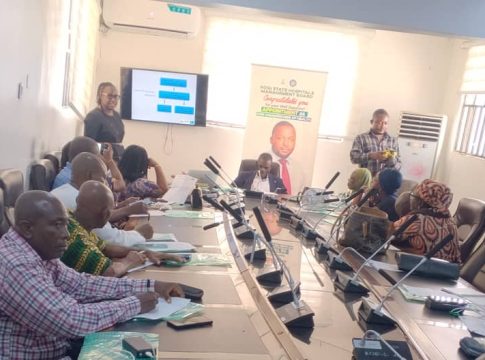
The Permanent Secretary of the State Ministry of Health, Mr Maji Enoch, disclosed this during a media briefing on the Kogi State Insecticide-Treated Nets Universal Coverage Campaign. He spoke on behalf of the Commissioner for Health, Dr Abdulazeez Adams Adeiza.
Enoch said a total of 3,141,485 insecticide-treated nets would be distributed to households under the state’s Malaria Elimination Programme.
He described malaria as a major public health challenge, noting that the disease contributes to school and workplace absenteeism, reduced productivity and significant economic losses through treatment expenses and lost working hours.
According to him, billions of naira are lost annually to malaria-related treatment, prevention and reduced productivity.
The Permanent Secretary noted that Kogi State had not benefited from a free insecticide-treated mosquito net distribution exercise in the last nine years, describing the upcoming campaign as a rare opportunity for residents to protect themselves against malaria.
Also speaking, the Malaria Consortium’s Programme Coordinator in Kogi, Olubunmi Ojelade, cited the 2025 Nigeria Malaria Indicator Survey, which showed that national malaria prevalence declined from 22 per cent in 2021 to 15.2 per cent in 2025.
She disclosed that Kogi State recorded a malaria prevalence rate of 8.9 per cent, adding that Nigeria still accounts for 24.3 per cent of global malaria cases and approximately 30 per cent of the estimated 579,000 malaria-related deaths worldwide.
Ojelade emphasised that sleeping under insecticide-treated nets remains one of the most effective ways of preventing malaria, noting that their use has contributed to a 50 per cent reduction in malaria incidence across sub-Saharan Africa.
She explained that distribution personnel wearing uniforms with the malaria campaign logo would visit households to register residents and distribute the nets free of charge.
She urged households to ensure that at least one representative was available during the exercise to complete registration and collect their allocated nets.
The programme coordinator further advised residents to air their newly collected nets in a shaded area for 24 hours before use and ensure they sleep under them every night throughout the year.
She also stressed the importance of properly tucking in the nets around sleeping areas to ensure maximum protection against mosquito bites.
The state government called on residents to cooperate with distribution teams and make proper use of the nets, stressing that widespread participation would be essential to reducing malaria infections and achieving a malaria-free Kogi State.