

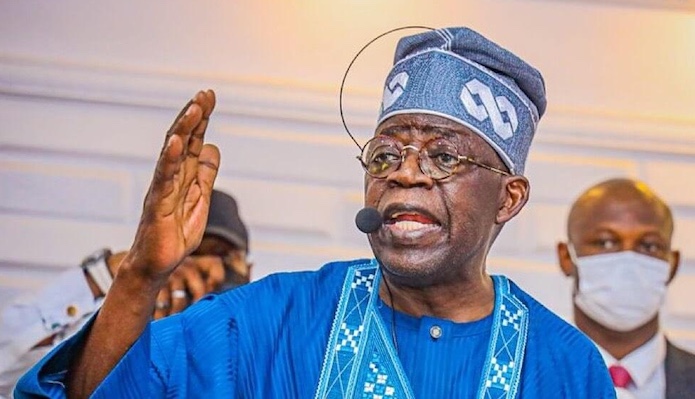
President Bola Tinubu has approved the posting of three ambassador-designates, reversing an earlier announcement that had included a fourth nominee for Turkey following a mix-up.
In a memo issued on Thursday to the Ministry of Foreign Affairs and signed by the President’s Special Adviser on Information and Strategy, Bayo Onanuga, announced the posting of four ambassador-designates drawn from the 68 nominees confirmed by the Senate last December.
The original list named Ambassador Ayodele Oke as ambassador-designate to France; Colonel Lateef Are as ambassador-designate to the United States of America; Ambassador Amin Dalhatu, former envoy to South Korea, as high commissioner-designate to the United Kingdom; and Usman Isa Dakingari Suleiman, former governor of Kebbi State, as ambassador-designate to Turkey.
However, within hours of the announcement reaching newsrooms, the Presidency issued a correction, citing a naming error concerning the Turkey posting.
In a “Note to Editors”, the Presidency said the appointment of an ambassador-designate to Turkey was still under review and should, for the moment, be disregarded.
A revised statement subsequently confirmed only three postings:Ambassador Ayodele Oke to France, Colonel Lateef Are to the United States, and Ambassador Amin Dalhatu as high commissioner-designate to the United Kingdom.
In the corrected memo to the Ministry of Foreign Affairs, Tinubu directed the ministry to formally notify the governments of the three countries in line with established diplomatic procedures.
The reversal has further heightened public scrutiny over the pace and coherence of President Tinubu’s diplomatic appointments, more than a year after Nigeria recalled most of its career and non-career ambassadors from foreign missions.
Since the mass recall in September 2023, Nigeria’s embassies and high commissions have largely been run by chargés d’affaires, a situation that diplomats and foreign policy analysts say has weakened the country’s diplomatic influence, slowed bilateral engagements, and strained consular services for Nigerians abroad.
Although the Senate confirmed 68 ambassadorial nominees in December 2025, the Presidency has proceeded cautiously and selectively with their deployment, citing the need for due diligence, alignment with foreign policy priorities, and financial constraints amid ongoing economic reforms.
The confusion surrounding the Turkey posting is particularly sensitive, as President Tinubu is expected to undertake a state visit to Ankara next week, where defence, trade and energy cooperation are expected to form and dominate discussions.
The initial announcement of an ambassador-designate to Turkey is widely seen as part of preparations for the visit before it was abruptly withdrawn on Thursday night.
Critics argue that the repeated revisions and corrections in official communications point to coordination lapses at the highest levels of government, undermining confidence in Nigeria’s foreign policy management.
The Presidency, however, maintains that the ongoing reviews reflect caution and strict adherence to diplomatic protocol rather than indecision.
For now, Nigeria remains without substantive ambassadors in several strategic capitals, even as the Tinubu administration seeks to reposition the country diplomatically and attract foreign investment amid sweeping economic reforms.