

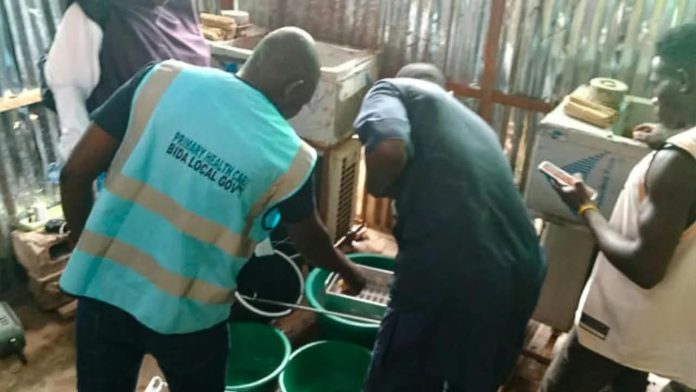
The Bida Local Government Council in Niger State has shut down an ice cream production facility over alleged poor hygiene, lack of operating licences and failure to obtain registration from the National Agency for Food and Drug Administration and Control (NAFDAC).
The council disclosed this following an inspection by its environmental department at a facility located around the Federal Polytechnic Bida area.
According to a statement issued by the council’s spokesperson, Aliyu Umar, the inspection team discovered serious hygiene concerns, including flies in the mixture used for ice cream production.
The council also reported that the products lacked labels indicating their contents, making it difficult to identify the ingredients and trace their sources.
t further stated that laboratory analysis of substances used in production reportedly revealed a lack of nutritional value and the presence of substances considered potentially harmful to human health.
However, the council did not disclose the specific substances identified or provide details of the laboratory findings.
The local government said production was suspended after the facility’s managers reportedly confirmed that they were operating without the necessary licences and NAFDAC registration numbers.
Production equipment and other materials at the facility were subsequently evacuated as part of the enforcement exercise.
The council explained that the operation followed complaints from residents about the facility’s activities. The complaints reportedly indicated that vendors gathered at the location every morning to purchase ice cream for distribution and sale across Bida.
The development raised concerns among local authorities about the potential risks to consumers who may have purchased products from the facility.
Speaking during the operation, the Supervisory Councillor for Health and Social Welfare, Ahmed Danladi, said the council was committed to protecting public health by ensuring that food and beverages sold within the area were produced under hygienic conditions and in compliance with relevant regulations.
Danladi added that the council chairman, Usman Mohammad Manko, remained committed to safeguarding the health and well-being of residents.
He warned that appropriate action would be taken against individuals and businesses found engaging in illegal food production or violating public health and environmental regulations.
The council also urged residents to report suspicious food production and distribution activities as authorities intensify efforts to improve food safety and protect consumers.