

The United Nations Children’s Fund (UNICEF) has urged journalists to track government budgets and spending on children to ensure that allocations translate into improved education, healthcare, nutrition and other essential services.
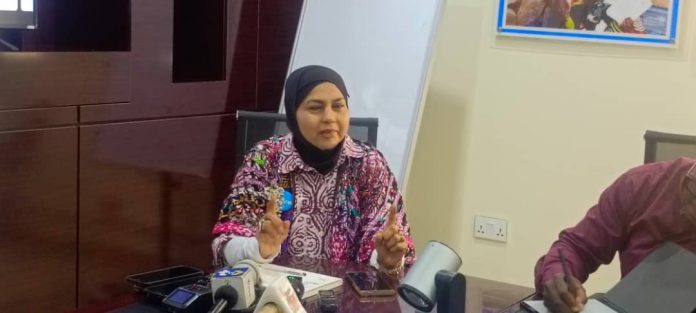
The UNICEF Chief of Field Office in Bauchi, Dr Nuzhat Rafique, made the call at a one-day Media Dialogue on Public Financing for Children organised by the Bauchi State Ministry of Budget and Economic Planning and Multilateral Coordination in collaboration with the UNICEF Bauchi Field Office.
Rafique, represented by UNICEF Education Specialist, Abdulrahman Ado, said the media had a critical role to play in ensuring that government budgets prioritised children and vulnerable families.
She said journalists should monitor the timely release and utilisation of funds allocated to programmes targeting children and women.
“Journalists have an important role to play in improving government budgets, ensuring timely release of funds and monitoring programmes targeting children and women,” she said.
The dialogue, which brought together journalists from Bauchi, Gombe and Plateau states, was organised as part of UNICEF’s advocacy efforts to strengthen public financing for children in its field office states.
Rafique urged journalists to go beyond reporting political promises and budgetary allocations by tracking the release and utilisation of funds as well as the impact of government programmes on children.
She also urged journalists to use the electioneering period ahead of the 2027 general elections to question political candidates on their plans for children, the cost of implementing such plans and how the funds would reach vulnerable children and communities.
Rafique expressed concern over the continued challenges of out-of-school children, malnutrition, poor healthcare services and inadequate access to safe water, sanitation and hygiene.
She called for non-partisan reporting focused on children’s rights, government commitments, public financing and measurable results rather than political personalities and affiliations.
Also speaking, the UNICEF Social Policy Specialist, Yusuf Auta, said investment in children should begin from conception and continue throughout childhood.
Auta stressed the need for adequate funding for maternal and newborn healthcare, noting that every child deserved to be born in a safe and healthy environment.
He urged journalists to follow the budget process from allocation and release of funds to utilisation and the results achieved.
“Journalists need to track whether government commitments are translating into improved services for children. It is not enough to report that money has been allocated; the media should find out whether the money was released, how it was spent and what results were achieved,” he said.
Presenting a framework for media accountability, Dr Ali Dankumo urged journalists to make children a central issue of political accountability, particularly during election campaigns.
He said journalists should examine political candidates’ manifestos and demand clear proposals on education, out-of-school children, maternal and child healthcare, nutrition, water and sanitation, child protection, disability inclusion, social protection, girls’ education and youth development.
Dankumo said political promises affecting children should be subjected to questions on their cost, source of funding, number of beneficiaries and implementation timeline.
He also encouraged journalists to report positive stories of resilience, successful interventions and solutions improving the lives of children and families.
Earlier , the Managing Director of the Bauchi Radio Corporation, Umar Shira, called on journalists to use their platforms to advocate better policies and increased investment in children’s health and welfare.
Shira described investment in children’s health as an investment in the future of society, saying adequate financing would help build a healthier, stronger and more productive generation.
He said responsible reporting, investigative journalism, public enlightenment and constructive engagement with policymakers could help expose funding gaps, amplify the voices of vulnerable children and hold duty-bearers accountable.
The dialogue also emphasised the importance of journalism ethics, including truth and accuracy, independence, fairness, accountability and minimising harm when reporting issues involving children and vulnerable families.
Participants were urged to ensure that their reports went beyond government promises and budget figures by asking whether funds were released, how they were spent, who benefited and what changes were achieved.