
The Federal Government has begun moves to establish a national care economy, with the draft National Care Policy expected to be submitted on October 29.
The Permanent Secretary, Federal Ministry of Women Affairs and Social Development, Esuabana Nko Asanye, disclosed this on Tuesday at a national consultation on the draft policy at Wells Carlton Hotel, Asokoro, Abuja.
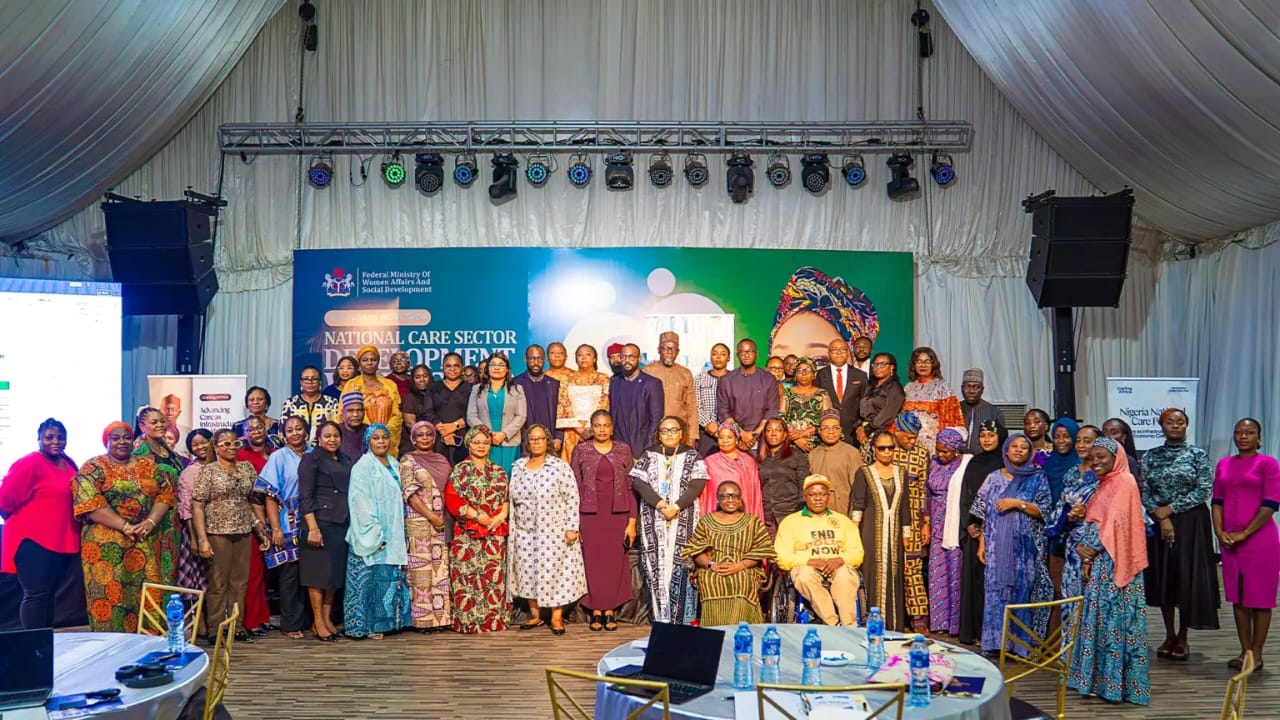
The consultation brought together about 100 representatives from government, development partners, the private sector, academia and civil society to review the proposed framework for organising, financing and regulating care work in Nigeria.
Asanye said women and girls perform about 80 per cent of unpaid care work in Nigeria, limiting their participation in education, employment, entrepreneurship and leadership.
“This is not simply a women’s issue. It is an issue of economic efficiency, social justice and national development,” she said.
She said the proposed care economy would cover childcare and early childhood development, maternal and newborn care, elderly care, disability support, community and home-based care.
Asanye called for collaboration among relevant government ministries and private-sector participation to address gaps in care services.
She also advocated linking care with social protection through measures including child benefits, cash transfers, disability support and maternity protection.
According to the National Policy on Women’s Economic Empowerment, Nigeria is estimated to forgo revenue equivalent to 23 per cent of GDP because women’s care responsibilities keep them out of the labour market.
The policy also notes that only five per cent of children below two years are enrolled in licensed childcare, while enrolment among children aged three to five is 15.4 per cent.
The draft policy contains 11 pillars covering unpaid care, maternal and newborn care, childcare, ageing, disability care, the care workforce, regulation, financing, employer-supported care, and trade and industry.
It also includes a costed action plan outlining responsible ministries, performance indicators and timelines.
The Director of Child Development in the ministry, Ali Andrew Madugu, said the care economy could create decent jobs, empower women and strengthen human capital.
Stakeholders at the consultation proposed amendments to the draft, including the integration of the National Agency for the Prohibition of Trafficking in Persons and the National Orientation Agency.
They also reviewed the proposed certification framework for care workers, with the ministry considering certification based on demonstrated competence to accommodate caregivers without formal education.