

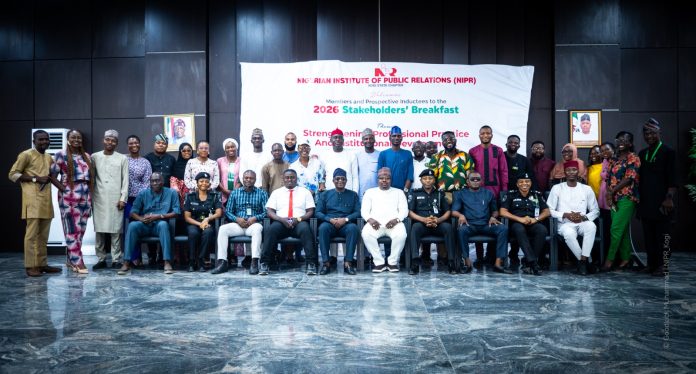
Members of the Nigerian Institute of Public Relations (NIPR) in Kogi State Chapter have taken proactive steps to reactivate activities of the body in the state.
This is contained in a communique issued on Tuesday at the end of a one – day stakeholders breakfast held in Lokoja.
The communique, which was signed by the Chairman of the Communique Drafting Committee, Yabagi Mohammed, said the meeting saw both registered and prospective professional coming together to forge a better course for the profession in the state.
According to the document, the meeting unanimously concluded to adopt the Special Adviser to the Executive Governor of Kogi State on Media, Ismaila Isah as its coordinator who would coordinate the activities of the Chapter pending a properly constituted Chapter executive committee through a validly conducted election.
The meeting, a first of its kind, drew PR professionals from the industry, the civil and public service and the academia to chart a new course for the state Chapter of the Institute.
The coming together has been a long time coming as concerned stakeholders have been making concerted efforts to see practitioners close ranks and form a united front to take the profession to its pride of place.
After extensive deliberations, the NIPR came up with resolutions that Public Relations practice has grown in leaps and bounds in Kogi State, which means that it should have grown beyond the current level in the state, adding that the profession is a management and professional function and that P.R.Os or spokespersons are not mere errand boys beckoned upon in reputation management or for damage control.
The body further resolved that P.R. professionals should be part of major decision making in organization so as to be able to contribute to issues and effectively design their messaging to the publics of that organization because it is a proactive endeavor that utilizes consistent engagement to ensure mutual understanding among stakeholders in the society.
Kogi NIPR also noted that just like in governance and Public Administration, PR is not an afterthought, it must be seen as a core of leadership role which ensure bridging of any communication vacuum capable of breeding distrust and credibility erosion.
It also said that PR practitioners must ensure accuracy over speed in communicating the activities of their organizations or principals, adding that strengthening PR education is an imperative for national development because it bridges the gap between governance and citizens, fosters social cohesion, and enhances economic stability.
It stressed that a structured, ethical, and professional approach to PR is essential for managing national reputations, preventing misinformation, and fostering trust between the government and citizens.
Papers were presented by members which cut across the academia, the government and private sector during the meeting.