

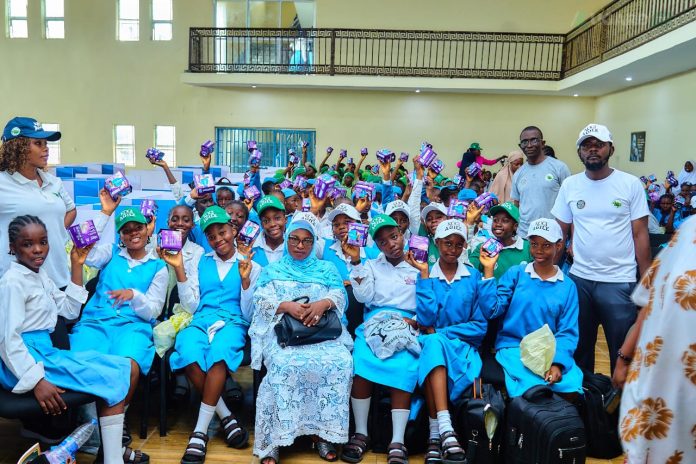
The Kogi State Government, through the Adolescent Girls Initiative for Learning and Empowerment (AGILE) Project, has intensified efforts to eliminate barriers to girls’ education with a menstrual hygiene awareness programme for students in the state.
The initiative, held to commemorate the 2026 Menstrual Hygiene Day, focused on promoting menstrual health, challenging harmful stereotypes, and equipping adolescent girls with the knowledge and confidence needed to thrive both academically and socially.
Speaking at the event, the State Coordinator of AGILE, Ahmed-Tijani Oricha, represented by the Deputy Project Coordinator, Mrs. Suleiman Aminat, said the AGILE remains committed to creating a supportive environment where girls can pursue their education without limitations arising from ignorance, stigma, or inadequate information about menstrual health.
She noted that menstruation was once treated as a taboo subject, leaving many young girls feeling embarrassed and uninformed.
According to her, sustained awareness and education are helping girls embrace the experience with confidence, dignity, and a better understanding of their health needs.
Mrs. Aminat also commended parents and teachers for their continued support towards the welfare and development of adolescent girls, stressing that collective efforts are essential to achieving improved educational outcomes for female students.
The Principal of GYB Model Science School, Mr. Yakubu Godwin, commended AGILE for bringing the sensitisation programme to the school, describing it as a timely intervention that would positively impact the students.
He urged the students to apply the knowledge gained from the programme, remain focused on their studies, and take advantage of opportunities designed to support their personal growth and academic success.
Also speaking, the Healthcare Coordinator at the Kogi State Ministry of Health, Dr. Grace Afolabi, described menstrual health education as a critical component of adolescent health and development.
She noted that proper menstrual hygiene management helps girls understand the physiological changes in their bodies, boosts self-confidence, and reduces health risks associated with poor hygiene practices.
Dr. Afolabi called for increased collaboration among government, development partners, and communities to improve access to sanitary facilities and other support systems that enable girls to manage their menstrual health safely and with dignity.
The programme featured health talks and interactive sessions on menstrual hygiene management, self-esteem, and the importance of dispelling misconceptions about menstruation.
Participants expressed appreciation to AGILE and the Kogi State Government, noting that the sensitisation has improved their understanding of menstrual health and strengthened their confidence in managing their wellbeing.