

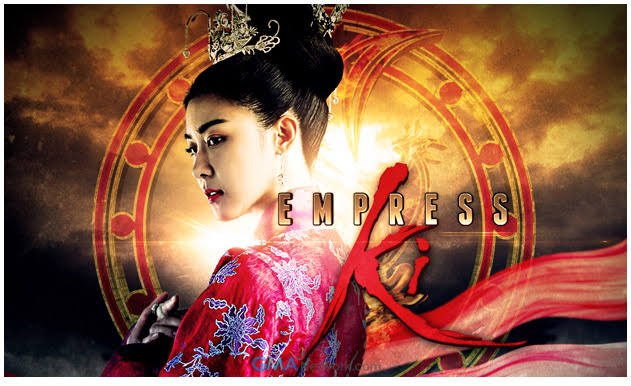
Empress Ki is often remembered for its grand romance, elaborate palace intrigue, and large-scale warfare, but to view it merely as a historical spectacle is to miss its most enduring achievement.
Beneath the silk robes and shifting alliances lies a piercing examination of power, how it is acquired, how it operates, and how it destroys those who mistake its appearance for its essence.
At its heart, the drama poses a timeless and uncomfortable question: what truly governs the world, money or power? Rather than answering through lofty dialogue, Empress Ki lets consequences speak.
Every betrayal, rise, and collapse becomes part of a larger argument about survival in political systems built on imbalance.
Throughout the series, wealth is presented as a seductive illusion. Figures such as El Temur, and later Kolta, wield immense riches with the confidence of men who believe money guarantees loyalty, authority, and permanence.
For a time, it appears they are correct. Armies can be raised, voices silenced, and influence purchased. Yet the narrative relentlessly dismantles this belief. Wealth in Empress Ki is useful, but shallow, it can fund power, but it cannot understand it.
Read Also :FG Hails Funke Akindele on Record-Breaking Milestone
Power, by contrast, is portrayed not as something one owns, but as something one navigates. It exists within institutions, symbols, legitimacy, fear, timing, and psychological dominance. Empress Ki’s rise is never driven by wealth alone.
Her true strength lies in her ability to read systems and people, to understand how influence flows through courts, armies, traditions, and human weakness. Her authority endures because it is rooted in perception and strategy, not currency.
The eventual downfall of El Temur and Kolta reinforces this distinction with brutal clarity. Despite their resources and ruthlessness, both men are undone by forces they fail to comprehend. Their tragedies expose one of the drama’s central truths: those who mistake wealth for wisdom remain permanently vulnerable.
Amid emperors, generals, and schemers, one of Empress Ki’s most quietly compelling figures is Tal Tal. Unlike those who chase thrones or fear losing them, Tal Tal represents a rare form of strength, intelligence without ambition. Calm where others panic, silent where others posture, he observes the political board long before others realize a game is being played at all.
Highly perceptive and strategically gifted, Tal Tal understands both political movement and human frailty with remarkable clarity. His loyalty to leaders who are visibly less capable than himself is not naïveté, but awareness. He sees their limitations, anticipates their failures, and remains nonetheless revealing a sober acceptance of how flawed systems endure.
News Hour : 2nd Anniversary; NGO Lauds Gov Ododo on Agriculture, Others
Through Tal Tal, Empress Ki exposes a sobering reality: power does not naturally rise to the wisest. More often, it rewards the loudest, the most privileged, or the most ruthless. Tal Tal comes to symbolize the unseen intellectuals who have sustained empires throughout history without ever ruling them.
His restrained obedience stands in stark contrast to the chaos unleashed by powerful but intellectually shallow rulers.
Empress Ki argues that while money may purchase power temporarily, only understanding sustains it. True dominance lies in patience, perception, and strategic intelligence qualities embodied most visibly by Empress Ki herself and quietly mirrored in Tal Tal.
Yet the tragedy remains unmistakable. In a world obsessed with crowns and titles, those who understand power most deeply are not always the ones history remembers. Empress Ki reminds us that the strongest forces shaping empires are often the least visible working in silence, shaping outcomes, and disappearing from the record once the throne is secured.