

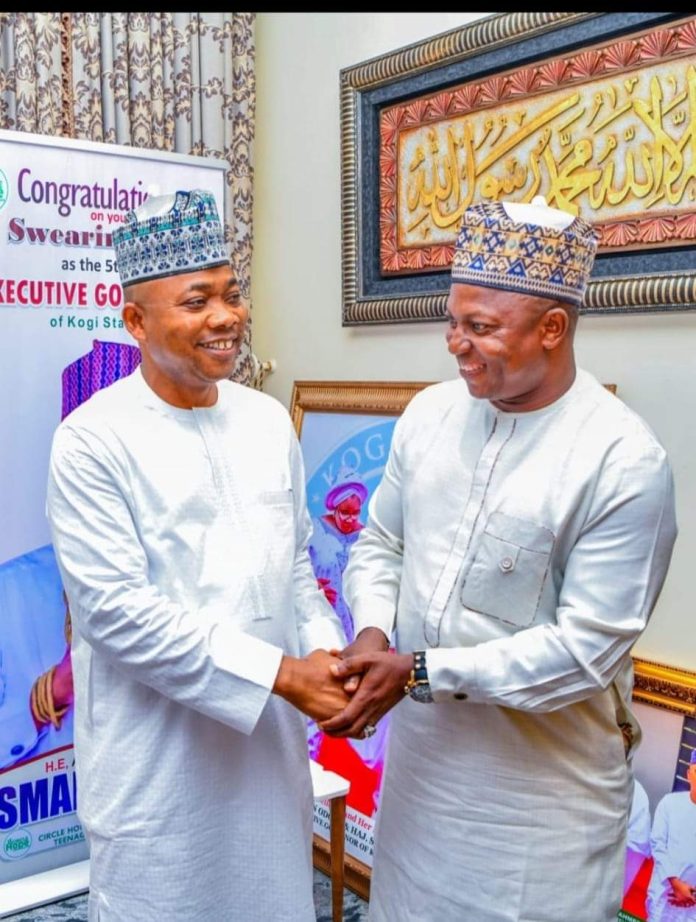
Kogi State Government has commended the Rector of Kogi State Polytechnic, Professor Salisu Ogbo, for his contribution to national discourse on governance and anti-corruption.
The commendation was made by Governor Ahmed Usman Ododo during the 37th Inaugural Lecture of the Federal University Lokoja.
Governor Ododo who was represented by the Deputy Governor, Comrade Joel Salifu, described the lecture as timely and courageous, noting that corruption remains a pressing challenge that has eroded public trust and deepened inequality in Nigeria.
He emphasized that when the fight against corruption is selective or driven by personal interests, it loses credibility and fails to achieve meaningful impact.
According to him, the battle against corruption cannot be left to government alone, adding that universities must continue to interrogate public policies, promote critical thinking, and offer practical pathways for reform.
The Governor reaffirmed the state government’s commitment to prudent management of public resources, transparency, and accountability in governance, stressing that leadership must lead by example.
He also pledged the government’s continued partnership with academic institutions in the areas of research and policy development, noting that knowledge remains one of the strongest weapons in the fight against corruption.
Delivering the 37th Inaugural Lecture of the Federal University Lokoja, Rector of Kogi State Polytechnic, Professor Salisu Ogbo described corruption in Nigeria as chronic and deeply rooted in governance systems, driven by widespread materialism, scarcity of public resources, and the dangerous mindset that the end justifies the means.
He called for a more inclusive and systemic approach to combating corruption in Nigeria, insisting that the fight must go beyond anti-corruption agencies.
According to him, corruption in Nigeria is often regime-conceptualised and shaped by prevailing political paradigms, making it difficult to address through selective or cosmetic interventions.
He warned against what he described as the shady nature of Nigeria’s anti-corruption efforts, where actions may appear sincere on the surface but are sometimes driven by hidden political or personal motives.
He recommends that genuine anti-corruption reforms must involve civil society organisations, academic institutions, and citizens, noting that corruption cannot be fought by government alone.