By Israel Thomas
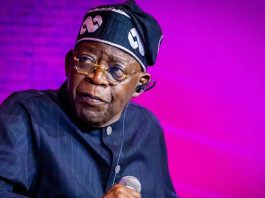
The Nigeria Labour Congress (NLC) has urged the Federal Government to fulfil its October 27 agreement with organised labour, particularly the payment of the N70,000 transportation allowance and the establishment of the Tripartite National Minimum Wage Negotiation Council.
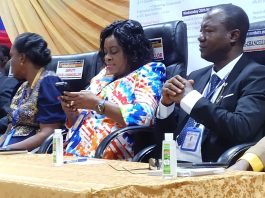
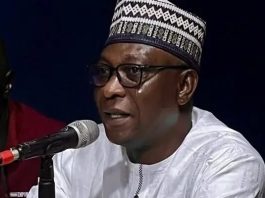
NLC President, Joe Ajaero, made the call on Monday at the opening of the 2026 NLC Harmattan School held at the Public Service Institute in Abuja.
Speaking on the theme, ‘Organising in the Context of Socio-economic Transformation’, Ajaero said workers expected the government to implement all aspects of the agreement, including the transportation allowance and the convening of the monitoring meeting.
He also called on state governments and private sector employers to honour the agreement, noting that adherence to negotiated terms was essential to sustaining industrial relations.
On the forthcoming minimum wage negotiations, Ajaero warned against attempts to weaken the labour movement through rumours and divisions among unions and workers, saying such actions could undermine the process before it commenced.
He said rising living costs, declining purchasing power, insecurity, unemployment and poverty had made workers’ education and collective organisation increasingly important.
According to him, workers were struggling with the costs of food, transportation, housing, healthcare and education, stressing that wages must guarantee a decent standard of living.
Ajaero maintained that economic reforms should be assessed not only through macroeconomic indicators but also by their impact on workers, pensioners, unemployed youths, small business owners and vulnerable households.
Ahead of the 2027 general elections, he advocated issue-based campaigns, urging political parties and candidates to present clear positions on employment, wages, social protection, education, healthcare, security, infrastructure, taxation and workers’ welfare.
He also called on the Independent National Electoral Commission (INEC) to ensure transparency and maintain a credible voters’ register to safeguard the electoral process.
The NLC president stressed that trade unions had responsibilities beyond defending wages and working conditions, noting that they also had a role in promoting democracy, social justice, equality and human dignity.
He urged participants to use the Harmattan School to acquire practical knowledge of economic policies, labour legislation, taxation, social protection, democratic governance, climate change and technological developments shaping the future of work.
Ajaero further called for stronger alliances between the labour movement and civil society organisations to sustain advocacy for workers and the wider Nigerian population.
Also speaking, the Director of the International Labour Organisation (ILO) Country Office for Nigeria, Ghana, Liberia and Sierra Leone, and Liaison Office for ECOWAS, Dr Vanessa Phala, called for stronger workers’ organisations, collective bargaining and social dialogue to ensure economic transformation translated into improved living and working conditions.
In her goodwill message, Phala said rising living costs, inequality, unemployment and underemployment continued to weaken workers’ purchasing power in Nigeria.
She said the struggle for a living wage went beyond securing the statutory minimum wage, stressing that employment should provide a dignified standard of living and a pathway out of poverty.
Phala explained that a living wage was linked to income, social protection, collective bargaining, public services, productivity and the fair distribution of national wealth.
She urged trade unions to adapt their organising strategies to accommodate workers in the informal economy, platform-based employment, outsourced jobs and other emerging forms of work.
She identified young people and women as groups requiring greater engagement, while advocating stronger representation and protection for informal sector workers who often faced unstable incomes and inadequate social protection.
Phala stressed that employment creation, workers’ rights, social protection and social dialogue were essential to ensuring that economic growth delivered social justice.
She also advocated stronger links between workplace organising and community concerns, including housing, transportation, healthcare, education and food security.
The ILO director reaffirmed the organisation’s commitment to working with the NLC, employers’ organisations and government to promote decent work, strengthen social dialogue and advance inclusive development in Nigeria.