Kogi State Governor, Ahmed Usman Ododo, has said the state is ready to become a major centre for agricultural processing, industrial production and commercial activities serving Nigeria and the West African market.
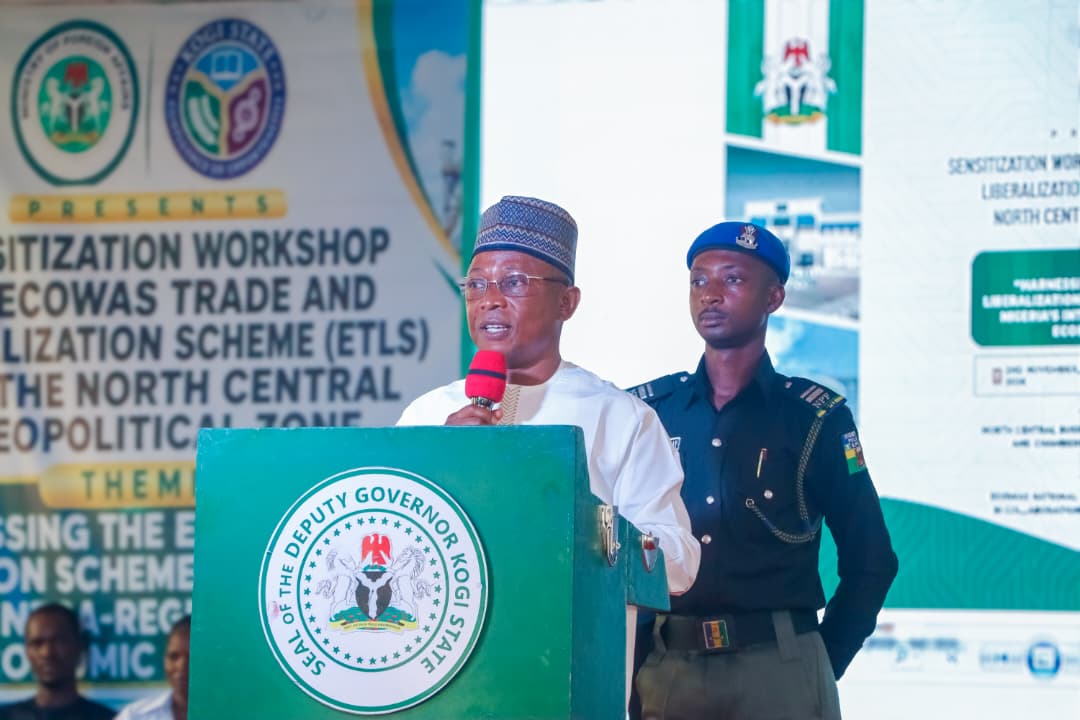
The governor stated this at a sensitisation workshop on the ECOWAS Trade Liberalisation Scheme (ETLS) for the North Central geopolitical zone, held at the Government House, Lokoja, with the theme, “Harnessing the ECOWAS Trade Scheme to Promote Nigeria’s Intra-Regional Trade and Economic Growth.”
Represented by his Deputy, Joel Salifu, the Governor said the state is pursuing investments in strategic infrastructure, agro-processing and the proposed Kogi International Airport , Kogi Rebrand Initiative and “Investing in Kogi” campaign aimed at showcasing its economic potential to investors.
He said Kogi would leverage its strategic location, agricultural resources, solid mineral deposits and road network to attract investment, expand production and boost regional trade.
“We want Kogi to become a major centre for agricultural processing, industrial production, logistics and commercial exchange serving Nigeria and the wider West African market,” he said.
He urged farmers, manufacturers, miners, processors, entrepreneurs and traders to also explore opportunities in other West African countries, stressing the need for quality products, proper packaging, certification and knowledge of trade procedures.
The governor called for stronger economic cooperation among States in the North Central Zone to develop trade corridors and strengthen regional value chains.
“Kogi State is open for business, ready for partnership and prepared to welcome investment that creates jobs and shared prosperity,” he said.
Speaking on the theme, the Minister of State for Foreign Affairs, Sola Enikanolaiye, said the trade scheme supports industrial growth, small businesses and cross-border trade.
He described the ELTS as an instrument of regional integration that provides duty-free and quota-free access to approved products originating from ECOWAS member states.
Enikanolaiye said the North Central region could benefit by processing its agricultural produce and raw materials, including livestock, mangoes, citrus fruits, millet, maize, sorghum and groundnuts, into finished products for export.
He noted that the Nigerian foreign policy is guided by four priorities: demography, development, diaspora and democracy, with emphasis on ensuring that the country’s international engagements promote the welfare of its citizens.
Earlier, the Permanent Secretary of the Federal Ministry of Foreign Affairs, Dunoma Ahmed, said businesses need adequate information on registration, certification and customs procedures to benefit from the scheme, warning that false declarations, misclassification of goods and smuggling could undermine the credibility of the regional trade agreement.
“Our collective responsibility is to create an enabling and predictable trading environment in which Nigerian products can compete effectively across the ETLS region,” he said.