

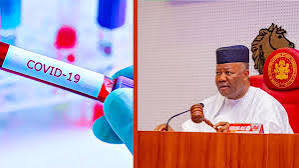
The Nigerian Senate has called for heightened vigilance and improved preparedness in the country’s public health system following the confirmation of a new case of COVID-19 in Cross River State.
Lawmakers warned that existing gaps in response capacity could expose the country to another potential outbreak if not urgently addressed.
The resolution was adopted after deliberation on a motion presented by Ipalibo Harry Banigo, who highlighted critical weaknesses in surveillance, funding, and emergency response systems.
She stressed that failure to strengthen these areas could worsen the nation’s already strained healthcare infrastructure.
Providing details of the confirmed case, Banigo explained that it involved a 53-year-old foreign national who entered Nigeria through the Murtala Muhammed International Airport on March 17 and later travelled to Calabar.
The individual reportedly developed symptoms weeks later and tested positive on April 16 after laboratory confirmation.
The senator expressed concern over the unusual timeline of infection, which she said exceeded the typical incubation period, raising the possibility of local transmission.
She added that additional suspected cases had already been identified, with contact tracing and laboratory investigations ongoing.
Banigo further warned that Nigeria’s response capacity is being undermined by shortages of critical materials, including testing kits, reagents, and personal protective equipment.
She also pointed to funding delays affecting the Nigeria Centre for Disease Control, which she said has struggled with procurement bottlenecks and inadequate budgetary support in recent times.
In its resolution, the Senate urged the Federal Ministries of Health and Finance to accelerate funding releases and strengthen coordination with relevant agencies.
It also directed the NCDC to provide a comprehensive report on national preparedness, while calling on state governments to boost local response systems.
Lawmakers cautioned that failure to act swiftly could heighten public health risks and undermine confidence in the country’s disease control efforts.