

Kogi State Governor, Ahmed Usman Ododo, has reaffirmed his administration’s commitment to creating a business-friendly environment that attracts investment, generates employment opportunities, and drives sustainable economic growth across the state.
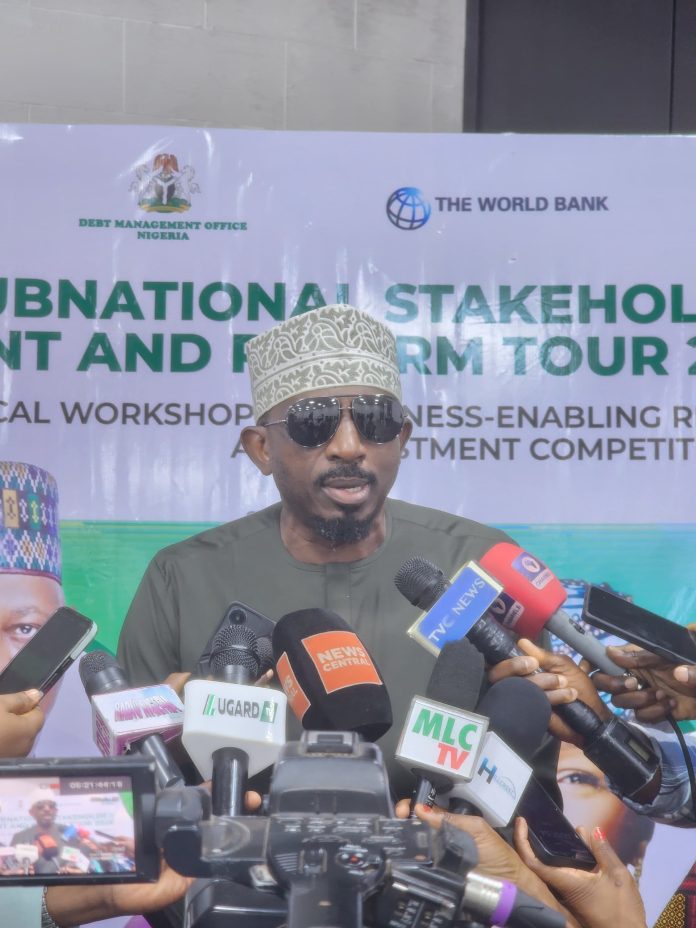
The governor made the commitment at the 2026 Nationwide Subnational Stakeholder Engagement Reforms Tour and Technical Workshop on Business-Enabling Reforms and Investment Competitiveness by the Presidential Enabling Business Environment Council held in Lokoja.
The engagement brought together government officials, development partners, private sector operators, business leaders, and investors from across the country to assess progress in improving the ease of doing business at the subnational level and explore strategies for attracting greater investment.
Represented by the Chief Economic Adviser and Focal Person for State Action on Business Enabling Reforms, Aliyu Inda Salami, Governor Ododo said the administration recognizes the importance of a conducive business environment in promoting economic prosperity, industrialization, job creation, and improved living standards.
He noted that the government has continued to implement reforms aimed at improving regulatory efficiency, strengthening transparency and accountability, simplifying government-to-business services, and creating an enabling environment for private sector growth.
“The Ododo administration remains committed to positioning Kogi State as one of Nigeria’s most attractive investment destinations. Through strategic reforms and innovative policies, we are creating an environment where businesses can thrive and investors can confidently commit their resources,” Salami stated.
Salami disclosed that Kogi State has recorded measurable progress under the SABER programme, improving from 36th to 30th position in national business environment rankings.
According to him, the state has entered the consolidation phase of its reform agenda with the development of the 2026 Business Enabling Reforms Action Plan, stressing that the plan is expected to further streamline business registration processes, improve land administration and documentation, strengthen public-private partnership frameworks, expand digital governance initiatives, and boost investment promotion efforts.
He explained that the administration’s reform programme is designed not only to attract new investors but also to support existing businesses operating in the state through an investor aftercare programme that provides continuous engagement, efficient grievance resolution, one-stop investment support services, and post-investment monitoring.
“The success of existing businesses is as important as attracting new investments. We are focused on creating a system where investors receive continuous support, enabling them to expand operations, create more jobs, and contribute meaningfully to the state’s economy,” he added.
The governor also highlighted ongoing efforts to support business expansion through improved access to land, infrastructure development, and sustained public-private dialogue aimed at addressing operational challenges and encouraging reinvestment.
Speaking at the event, Director-General of the Presidential Enabling Business Environment Council, Princess Zarah Audu, commended Kogi State for the progress recorded in improving its business climate and investment competitiveness.
She emphasized that the success of President Bola Ahmed Tinubu’s economic transformation agenda depends on strong collaboration among federal, state, and local governments in implementing reforms that directly impact businesses and investors.
Audu described subnational governments as critical drivers of business growth and investment and urged Kogi State to sustain its reform momentum.
“Kogi State has demonstrated commendable commitment to improving its business environment. Sustaining these reforms will be critical in unlocking greater economic opportunities, attracting investments, and driving long-term growth,” she said.
Other speakers at the event praised the state’s efforts, describing Kogi as a strategically state with significant economic potential due to its position as a gateway between northern and southern Nigeria.
They urged the state government to strengthen investment promotion through improved branding, harmonized revenue collection, digital payment systems, and the establishment of a comprehensive one-stop investment centre.
The workshop featured technical sessions on regulatory impact assessment, investment competitiveness, dispute resolution, and the role of small claims courts in supporting entrepreneurship and efficient debt recovery for small businesses.
Participants expressed optimism that the administration’s reform-driven policies would continue to attract local and foreign investments, stimulate industrial growth, and strengthen the position of Kogi as a preferred investment destination in Nigeria.