

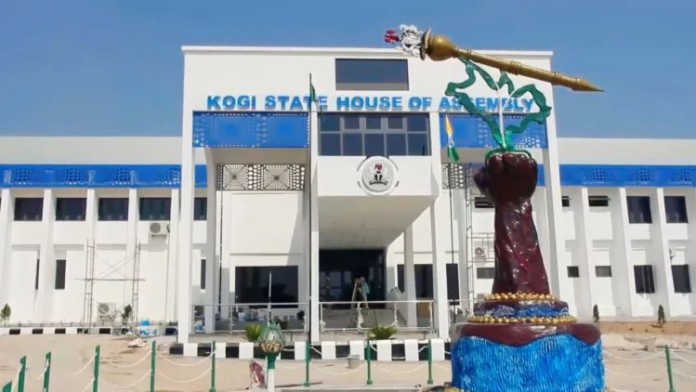
The Kogi State House of Assembly has moved to regulate house rents and strengthen protection for tenants with a public hearing on a proposed tenancy bill aimed at addressing arbitrary rent increases, unlawful evictions and excessive charges by landlords and property agents.
The bill seeks to repeal the Rent Control and Recovery of Residential Premises Law, 2007, and replace it with the Kogi State Tenancy Bill, 2027.
The proposed legislation provides a modern legal framework that reflects current economic realities while clearly defining the rights and responsibilities of landlords, tenants and property agents.
The sponsor of the bill and member representing Ankpa I State Constituency, Hon. Lawal Akus, said the proposed legislation is designed to establish a fair, transparent and balanced tenancy system in Kogi State.
According to him, the bill seeks to address rising rental costs, exploitative agency fees and prolonged tenancy disputes across the state.
He said the bill will regulate tenancy agreements, provide lawful procedures for the recovery of premises, prohibit illegal evictions and harassment, strengthen dispute resolution mechanisms and promote transparency in tenancy transactions.
The lawmaker noted that the public hearing represents a modest but significant effort at promoting participatory democracy by ensuring that stakeholders and members of the public contribute meaningfully to the law-making process.
Akus stressed that while landlords are entitled to legitimate returns on their investment, tenants also deserve protection from exploitation.
He added that rapid urbanisation and increasing demand for housing have made comprehensive tenancy reforms necessary.
He assured stakeholders that all memoranda presented at the hearing would receive careful legislative consideration before the bill proceeds to the next stage.
Presenting a memorandum, Jibril Onoru-Oiza Abu described the bill as timely and urged lawmakers to ensure rent reviews are tied to improvements in housing conditions rather than public infrastructure projects alone.
He recommended limiting advance rent payments to one year, regulating property agents, capping agency and legal fees, prohibiting rental bidding and establishing a specialised Tenancy Tribunal for the speedy resolution of disputes.
The Acting Assistant Director of Legal Drafting in the Kogi State Ministry of Justice, Olowolaiyemo Ehitayo, proposed amendments to strengthen the bill, including expanding the definition of accommodation to expressly include residential premises. She also recommended reviewing the functions of the proposed Rent Control Board and transferring its chairmanship from the Directorate of Civil Litigation to the Directorate of Citizen’s Rights.
According to her, additional technical observations had already been submitted to the House Committee through the ministry’s memorandum.
Also speaking, Commissioner for Housing and Urban Development, Taiye Abanika, described the proposed bill as a timely response to rising rental costs but called for the inclusion of the Ministry of Housing and Urban Development on the proposed Rent Control and Tenancy Board, arguing that tenancy regulation is primarily a housing matter.
He said the constitutional power to appoint members of the board should rest with the Governor rather than the Attorney-General.
The Magistrates Association of Nigeria, Kogi State Chapter, also raised constitutional concerns over provisions empowering the proposed Rent Control Task Force to seal properties without court orders and making recourse to the proposed board a mandatory condition before parties can approach the courts.
Similarly, Chairman of the Nigerian Institution of Estate Surveyors and Valuers, Kogi State Branch, John Eniwaiye, urged lawmakers to enact legislation that protects tenants while safeguarding the legitimate interests of property owners and promoting fairness and stability in the state’s housing sector.
At the end of the public hearing, stakeholders generally agreed that although the bill requires further refinement, its eventual passage would improve landlord-tenant relations, reduce housing disputes and establish a more equitable tenancy system in Kogi State.
The House Committee assured participants that all memoranda and recommendations received during the hearing would be carefully reviewed before the bill advances to the next stage of legislative consideration.