

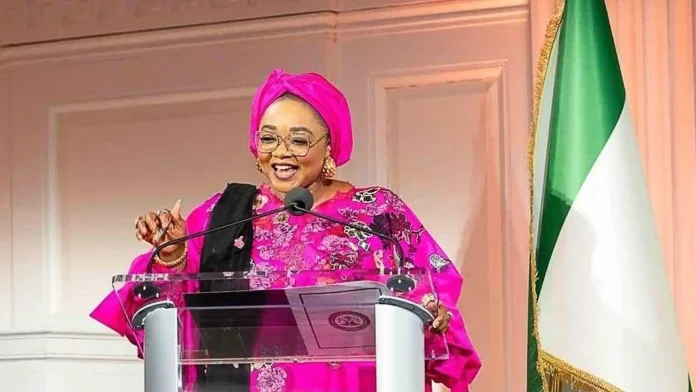
President Bola Tinubu has called on Nigerian women to strengthen solidarity and support systems to promote their participation in governance, democratic nation-building and peaceful coexistence.
Tinubu made the call at the maiden Nigeria Women for Peace and Democracy Summit and Awards 2026, organised by the National Council of Women’s Societies (NCWS) Nigeria in Abuja, with the theme, “Women as Catalysts for Peace, Democracy and Inclusive Governance.”
The President, represented by the Director-General of the Maryam Babangida National Centre for Women Development, Dr. Adedayo Benjamins-Laniyi, described women as key drivers of democracy and peacebuilding.
He commended the NCWS for convening the summit, stressing that stronger solidarity among women would contribute to a more peaceful nation and strengthen democratic institutions.
Tinubu also reaffirmed his administration’s commitment under the Renewed Hope Agenda to implementing policies and programmes that would expand women’s leadership opportunities and participation in governance.
Earlier, the National President of NCWS, Princess Edna Azura, said the summit was organised ahead of the 2027 general elections to position women as active participants in peacebuilding, governance and democratic stability.
She stressed the need for women to have a place in decision-making processes, noting that they often bear the greatest burden of conflict and instability.
Similarly, the Minister of Women Affairs and Social Development, Hajiya Imaan Sulaiman-Ibrahim, represented by the Chairman of the Governing Council of the Maryam Babangida National Centre for Women Development, Princess Jummai Idonije, said sustainable peace and national security could not be achieved without women’s inclusion in decision-making.
The Minister described women’s participation in governance as a necessity for national stability rather than an act of charity.
Also speaking, the APC Senatorial Candidate for the FCT, Philip Aduda, commended the NCWS for organising the summit and pledged support for policies and programmes that would strengthen women’s participation in governance.
Participants drawn from women’s groups, ministries, departments and agencies, as well as diplomatic missions, reaffirmed the need for greater inclusion of women in governance and democratic processes.