

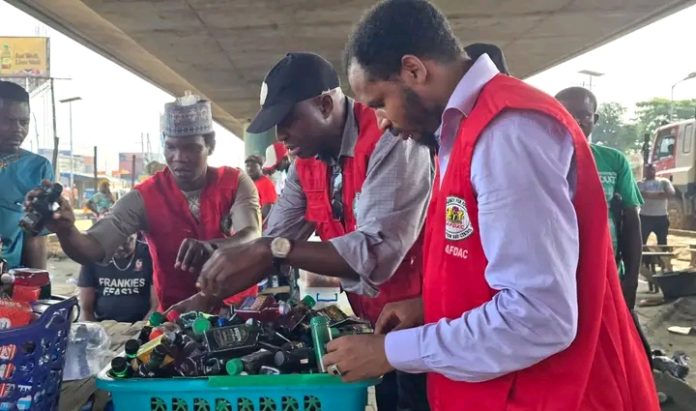
The National Agency for Food and Drug Administration and Control (NAFDAC) has linked the recent spate of deaths in Ondo State to high methanol concentration from locally prepared herbal and alcoholic drinks.
The outbreak, first reported in early September 2026 in parts of Odigbo Local Government Area of Ondo State, has so far recorded 182 cases with 48 deaths, up from initial reports of 31 deaths 20 in Odigbo Town and 11 in Araromi-Obu as investigations progressed and more cases were reported.
The affected communities are in Odigbo Local Government Area, including New Town, Odole, Okele, Orita Odigbo, Araromi-Obu, and Oniparaga, with Irele Local Government Area also listed among the affected locations, according to the agency’s update signed by Director-General, Prof. Mojisola Adeyeye.
Laboratory analysis of 15 samples collected from the affected communities found that 11 of the samples also tested positive for Cannabis indica, while chemical screening with Gas Chromatography confirmed high methanol concentration in the drinks.
Acute oral toxicity tests conducted using laboratory mice recorded critically sick animals in all the samples, while approximately 50 per cent mortality was recorded in six of the 15 samples tested, though the critically ill animals recovered after 24 hours, with the possibility that those that recovered could die if exposed to a second dose.
NAFDAC warned that methanol in oral preparations is extremely dangerous, and ingestion can cause severe poisoning leading to blindness, organ failure, and death.
Five affected persons have reportedly become totally blind, while two others are partially blind.
The agency said 182 cases had so far been recorded in connection with the incident, with 90 persons admitted and discharged, six still hospitalised and 31 treated as outpatients.
NAFDAC stressed that the laboratory findings were still preliminary and that further confirmatory tests were ongoing to determine the exact concentration of methanol and identify other possible toxic agents in the concoctions.
“the combination of high mortality in animal testing and confirmed methanol contamination strongly suggests that the samples pose a serious public health risk.”
Investigations have led to the arrest of 15 persons in connection with the suspected production, sale, and distribution of the implicated locally produced alcoholic/herbal beverages, while the agency said surveillance, case management and risk-control measures remain ongoing as authorities continue efforts to contain the outbreak.